

Lens Colors for Driving: Daylight, Glare, and Tint Choices
Choosing lens colors for driving starts with visibility. Bright sun, shifting shade, and gray weather can make the same route feel different. A tint changes how the scene looks, but its color alone does not tell you whether a particular lens is suitable for the road.
First, check the manufacturer’s driving guidance and how much visible light the lens transmits. Traffic signals must remain easy to recognize. Then consider the tint you enjoy. Here is how to think about six colors, polarization, and changing daylight.
Lens Colors for Driving: What to Check First
The College of Optometrists’ guidance on tints and driving considers light transmission and traffic-signal recognition. Very dark category 4 sunglasses are unsuitable for driving. A lighter-looking color is not automatically a better choice, either.
Do not treat this color guide as certification of any AVIEW lens for driving. Confirm suitability for your specific lenses and conditions before using them behind the wheel. If that information is unavailable, ask your optician or the manufacturer rather than choosing by color alone.
Comparing Lens Colors for Driving in Daylight
Strong sunlight · Black or gray
A neutral tint can reduce brightness with less color shift. Check darkness and driving suitability.A warmer daytime view · Brown
May make contrast feel more pronounced; it does not guarantee better depth perception.A balanced-looking view · Green
A tint preference to compare in daylight; check signal recognition and light transmission.A warmer look in flat daylight · Yellow
Can make a scene feel brighter, but still reduces transmitted light. Not a night-driving solution.A fresh, cool-toned view · Blue
A visual preference, not a proven alertness aid or a general driving recommendation.A warmer look on gray days · Rose
Adds a rosy cast; do not assume it improves road visibility in dim conditions.Reflected daytime glare · Polarized lenses
Polarization is a separate feature that reduces reflected glare. Check dashboard readability.
Use this comparison to explore appearance and comfort, not to match every weather condition to a guaranteed driving benefit. For a broader introduction, read our guide to six colored lens options.
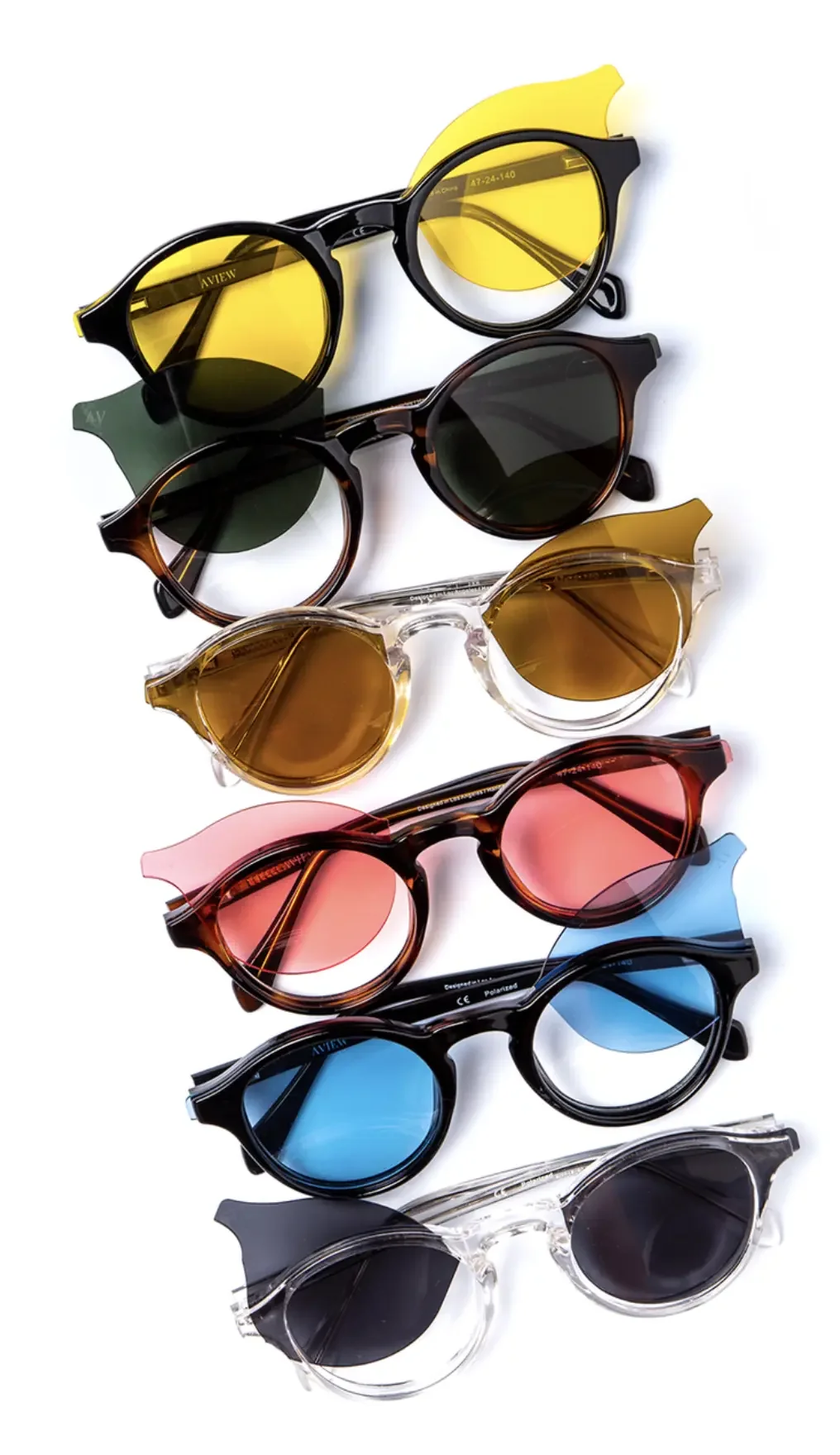
Black Lenses: A Neutral View in Bright Daylight
Black lenses are worth exploring when you prefer a darker, relatively neutral view in bright daylight. Compared with a warm rose or cool blue tint, a neutral black or gray lens can reduce brightness with less change to the colors around you. The exact effect depends on the lens.
When choosing black lens colors for driving, check the specific lens’s light transmission and road-use guidance. A dark appearance alone does not establish UV protection or driving suitability. Avoid very dark category 4 lenses behind the wheel, and switch out of sun lenses when daylight fades.
Explore AVIEW round black lenses or square black lenses. Match the lens shape to your frame, and confirm the product’s suitability for your intended use.
Blue Lenses: A Fresh Start to the Day
A cool blue tint can give familiar scenery a fresh quality. If you enjoy that look, it may be an appealing part of your morning routine. Some people describe the experience as energizing; others prefer warmer colors.
That personal impression does not establish that blue lenses improve alertness, adjust your body clock, or make morning driving safer. In particular, a blue appearance does not tell you how the lens handles traffic-signal colors. Never use a tint as a way to manage drowsy driving.
Explore AVIEW round blue lenses or square blue lenses for compatible frames. Check the specific product’s features and intended use before choosing it for the road.
Rose Lenses: A Warmer View of Gray Weather
Rose offers a different visual experience. Overcast skies and muted winter landscapes can look warmer through a rosy tint. For someone who enjoys that color, the scene may feel a little more lovely. This is a preference, not a promise of a mood or vision benefit.
However, snowy scenery is not always dim. Snow can reflect strong sunlight, while heavy cloud can reduce available light. Choose eyewear based on actual brightness and confirmed suitability, rather than the season or how cheerful the tint looks.
Compare round rose lenses and square rose lenses. As with blue, do not assume a rose tint is appropriate for driving without checking the lens specifications.
Polarization Is Different from Lens Color
Polarization can reduce reflected glare from surfaces such as wet pavement. It is a lens feature, not a color: a blue or brown lens is not necessarily polarized simply because of its tint.
The American Academy of Ophthalmology explains polarization and notes that it can make some LCD screens difficult to read. Before setting off, check your dashboard and navigation display while parked. Also verify UV protection separately; polarization does not establish UV protection.
What About Yellow Lenses and Night Driving?
A yellow tint can make a view feel warmer or more vivid. That impression does not mean more light reaches your eyes. The College of Optometrists advises against yellow filters for night driving: they lack proven benefit and can make dark areas harder to see.
Avoid colored sun lenses at night or when visibility is poor. Use the vision correction you need, and discuss persistent glare or difficulty seeing with an eye-care professional.
One Frame for Changing Daylight
Interchangeable lenses let you explore different daytime looks without choosing a new frame for every color. Black offers a darker look; brown adds warmth; green offers another balance. Yellow, blue, and rose each change the character of the view. When comparing lens colors for driving, the specific lens matters more than the color name.
With AVIEW, match round lenses to round frames and square lenses to square frames. Our interchangeable lens guide explains the fitting process. Always park safely before changing lenses.
Each standard wallet holds one pair in two separate slots. The optional Multi Lens Wallet holds two pairs in four slots, with one lens per slot. Explore the AVIEW shop to compare compatible frames and colors for your everyday routine.